[Dev Weekly #113] Claude 4.8 Rewrites Agent Systems | Ruby LSP with Prism | Ruby’s Concurrency Finally Explained

On this page
HELLO EVERYONE!!! It’s May 29th, 2026, and you are reading the 113th edition of Codeminer42’s tech news report. Let’s check out what the tech world showed us this week!
The Miners’ post of the week ??????
What Puma, Falcon, and Pitchfork teach you about Ruby concurrency
I went into this expecting a dry comparison and came out with a genuinely useful mental model for Ruby concurrency. The breakdown of how Pitchfork (processes), Puma (threads), and Falcon (fibers) each solve the same problem three completely different ways finally made the GVL click for me. What got me was the concrete observation that every Ruby concurrency primitive except Ractors has a production web server built on it, and why that gap matters for Ruby 4.0. If you’ve ever wondered why Shopify runs Pitchfork, or when to actually use Falcon over Puma, this walks you through the tradeoffs with enough specificity to make real decisions.
Introducing Claude Opus 4.8
Anthropic released Claude Opus 4.8, showing meaningful improvements in agentic reasoning, code reliability, and honesty compared to its predecessor. The model includes new features like dynamic workflows for large-scale tasks and effort controls to balance speed and quality. If you’re building agent systems or working with complex multi-step tasks, the better judgment and more efficient tool use will likely translate to more reliable production workloads.
Extending Ruby LSP with Prism — by Janko Marohnić
Learn how to build custom Ruby LSP extensions by walking through a practical example: implementing go-to-definition for Rails render calls in templates. Marohnić breaks down LSP mechanics, Prism’s AST traversal, and the add-on architecture, giving you everything you need to extend Ruby LSP with your own features.
A new Register Allocator for ZJIT
Deep dive into ZJIT’s new linear scan register allocator and how it improves upon YJIT’s block-local approach by analyzing entire methods at once. You’ll understand the fundamentals of register allocation, live ranges, and why switching from local to global allocation lets the compiler keep values in registers across basic block boundaries for better performance.
AI Didn’t Create These Problems. It Just Stopped Routing Around Them. — by B. Weaver
Weaver argues that AI isn’t surfacing new problems so much as exposing the gaps we’ve always papered over with institutional knowledge. He walks through concrete examples like undocumented callbacks and stale tests, then shows how treating AI failures as system failures (not agent failures) forces you to build the guardrails that should’ve existed anyway: clear ownership, structured tool output, and an 80/20 split between deterministic and probabilistic code.
Beyond the Prompt: Claude Code Mastery — by Arpan Patel
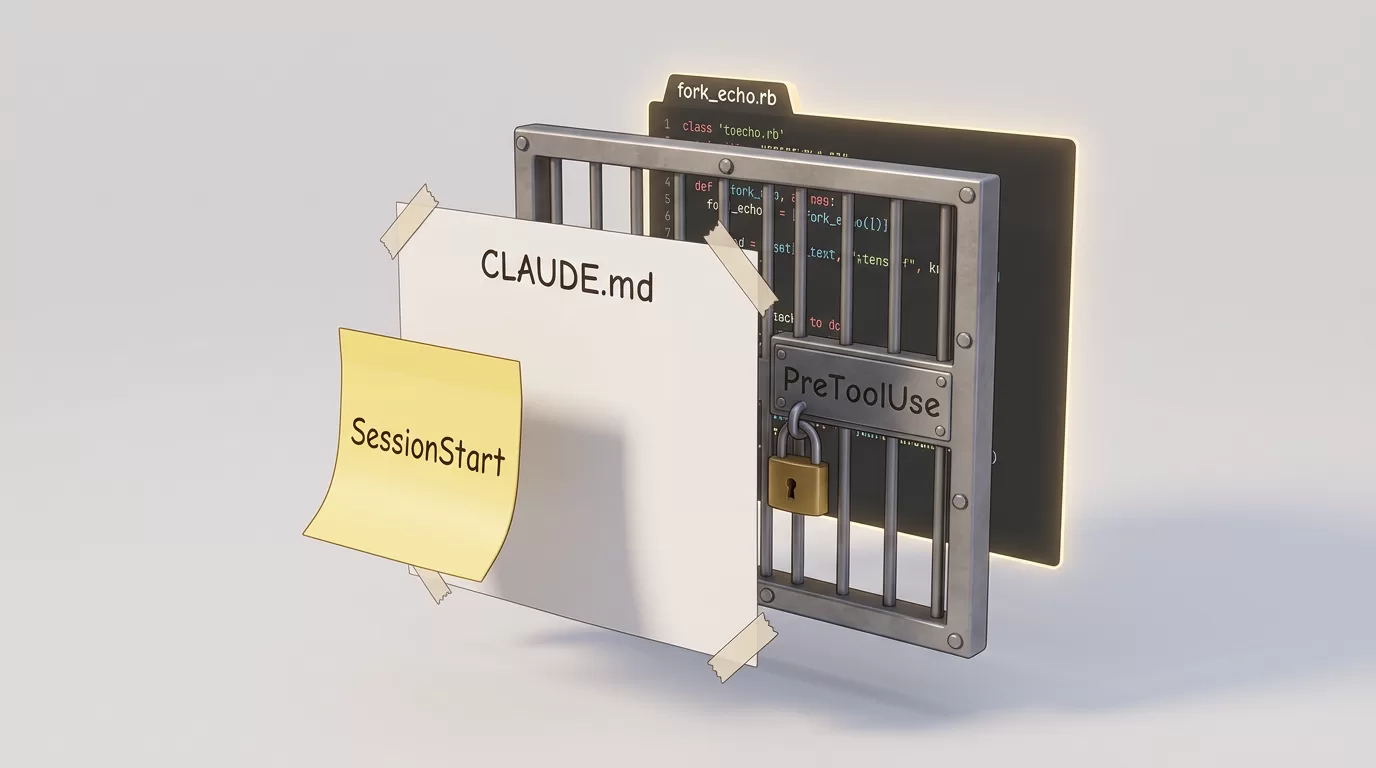
A deep dive into Claude Code as a programmable agent rather than a chatbot, covering how to structure projects with the .claude directory, write effective CLAUDE.md files, and build custom skills and subagents. Boris Cherny and the Anthropic team share concrete patterns that unlock 2-3x quality improvements through verification loops and compounding rule refinement.
Nobody Cracks Open a Programming Book Anymore
Programming book sales are collapsing as AI chatbots and coding assistants replace the role traditional that technical books once played. The author reflects on how we learned to code through slow, deliberate practice with printed material, and what we might be losing as that shifts to conversational AI that demands nothing from us except consumption.
Five foundations for building complex Rails apps — by Pawel Dabrowski
Pawel distills five architectural foundations for scaling Rails beyond typical complexity: Domain Driven Design, Mutation Testing, Event Sourcing, CQRS, and AI-native development. If you’re wrestling with a monolith that’s outgrown vanilla Rails patterns, you’ll get concrete mental models and proven techniques that map business logic to code without weird abstractions.
Childhood Computing — by Susam Pal
Susam reflects on formative computing experiences in the early 90s, from Logo programming on hand-me-down IBM PCs to discovering 3D graphics through games like Grand Prix Circuit. If you’re curious about how early constraints shaped a developer’s mindset, you’ll find unexpected parallels between childhood problem-solving with pen and paper and modern programming practices.
How soon is now in PostgreSQL?
A deep dive into a subtle PostgreSQL gotcha where now() returns transaction start time rather than wall clock time, causing distributed locking logic to fail during retries. You’ll learn why mixing transaction timestamps with timeout checks can silently break your assumptions and exactly how to fix it with one variable change.
Migrating from Go to Rust — by Matthias Endler
A pragmatic look at why Go teams consider moving to Rust, focusing on correctness guarantees rather than performance. You’ll learn how Go patterns map to Rust’s type system, where the borrow checker eliminates entire categories of bugs, and when the migration effort actually pays for itself in production reliability.
Modern Web Guidance
Chrome’s new guidance framework helps you build accessible, performant, and secure web experiences by integrating expert-vetted best practices into AI coding agents. You’ll get practical guidance on building modern UI components, modernizing legacy code, improving security, and optimizing performance, with tooling that works directly in Chrome DevTools for real-time audits and automated fixes.
—
And that’s all for this week! Wish you all a great weekend and happy coding!
We want to work with you. Check out our Services page!